
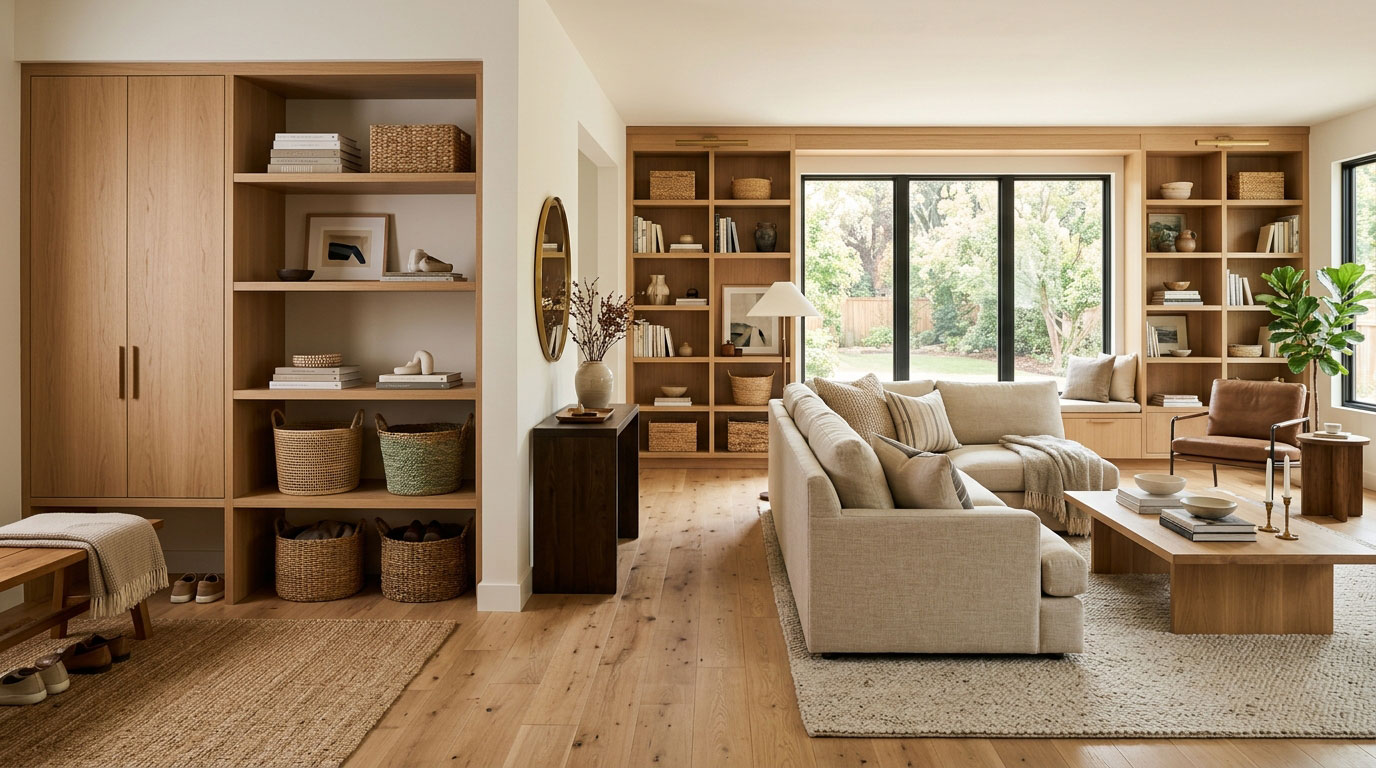
An organized home does not have to look perfectly styled or completely minimal. In fact, some of the most useful home organization ideas are surprisingly simple. The goal is not to remove everything you own. It is to make the things you use easier to find, easier to put away, and less likely to create clutter.
That approach fits well with current home-design trends. In 2026, homeowners and designers are showing greater interest in concealed storage, multifunctional built-ins, organized activity zones, and other features that make homes work more efficiently without sacrificing comfort.
You do not need a major renovation to apply the same principles. A few thoughtful changes to storage, daily routines, and the way frequently used items are placed can make almost any home feel noticeably calmer.
Start by Reducing What You Need to Organize
Before purchasing baskets, bins, drawer dividers, or additional cabinets, take a closer look at what is already occupying your space.
Organizing unnecessary belongings usually creates a temporary solution rather than a lasting one. A packed closet can still feel crowded even when everything is neatly placed inside matching containers.
Begin With One Small Area
A whole-house decluttering project can quickly become overwhelming. Instead, choose one manageable area such as a kitchen drawer, bathroom cabinet, nightstand, entryway shelf, or section of a closet.
Remove the items, group similar belongings together, and decide which ones still serve a purpose in your current life. You may discover duplicates, expired products, unused items, or things that naturally belong somewhere else.
Organize What Remains
Once unnecessary items are removed, organization becomes much easier. This follows one of the most practical principles highlighted in modern organizing advice: decide what deserves space before deciding how to store it.
You can find additional room-by-room organization principles from Houzz’s organizing guidance.
Create a Home for Everyday Items
Many homes feel disorganized not because they lack storage but because frequently used objects do not have obvious places to go.
Keys end up on kitchen counters. Shoes collect beside the door. Mail moves from one surface to another. Chargers disappear into different rooms.
Assigning specific homes to these everyday objects can make a noticeable difference.
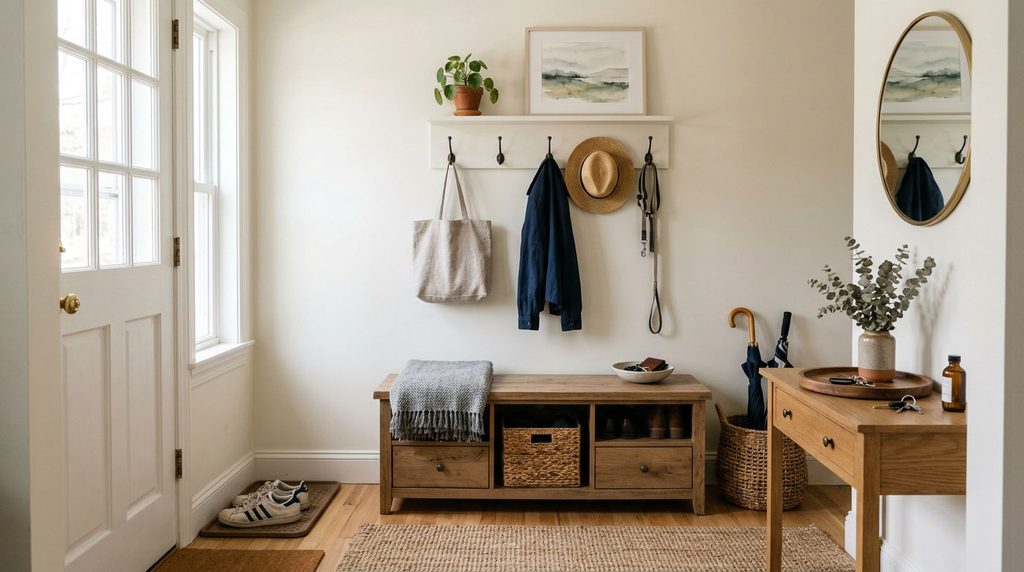
Build a Simple Entryway Drop Zone
The entryway is one of the most useful places to establish a small organization system because it is where many household items enter and leave the home.
A shallow tray can hold keys and sunglasses. Hooks can provide designated places for jackets and bags. A basket can contain scarves, hats, pet accessories, or other grab-and-go items. Closed shoe storage can prevent the floor from becoming crowded.
The exact setup matters less than consistency. If everyone knows where an item belongs, putting it away requires less thought.
Store Items Where You Actually Use Them
One of the simplest ways to make a home easier to maintain is to organize according to real routines rather than traditional expectations.
If you frequently read on the sofa, keep a small collection of books nearby. If you charge devices in the living room, create a discreet charging location there. If breakfast is prepared in one part of the kitchen every morning, keep the most commonly used supplies within that zone.
Think in Activity Zones
This principle is increasingly visible in contemporary home design. Instead of asking where an object would traditionally be stored, consider where it is most useful.
Your home might contain a coffee zone, work-from-home zone, children’s homework zone, exercise area, reading corner, or pet-care station.
Grouping related belongings together reduces the number of times you have to cross a room or search through unrelated storage.
The same approach works particularly well in kitchens. Our guide to kitchen trends that make everyday cooking easier explores how task zones and smarter storage can simplify meal preparation.
Use Closed Storage to Reduce Visual Clutter
Open shelves can be attractive, but not everything needs to be displayed. Everyday necessities often come in different colors, packages, and shapes, which can make a room appear busier than it really is.
Closed cabinets, drawers, baskets, boxes, and storage benches can help maintain a calmer visual environment.
Hidden Storage Is a Major 2026 Design Direction
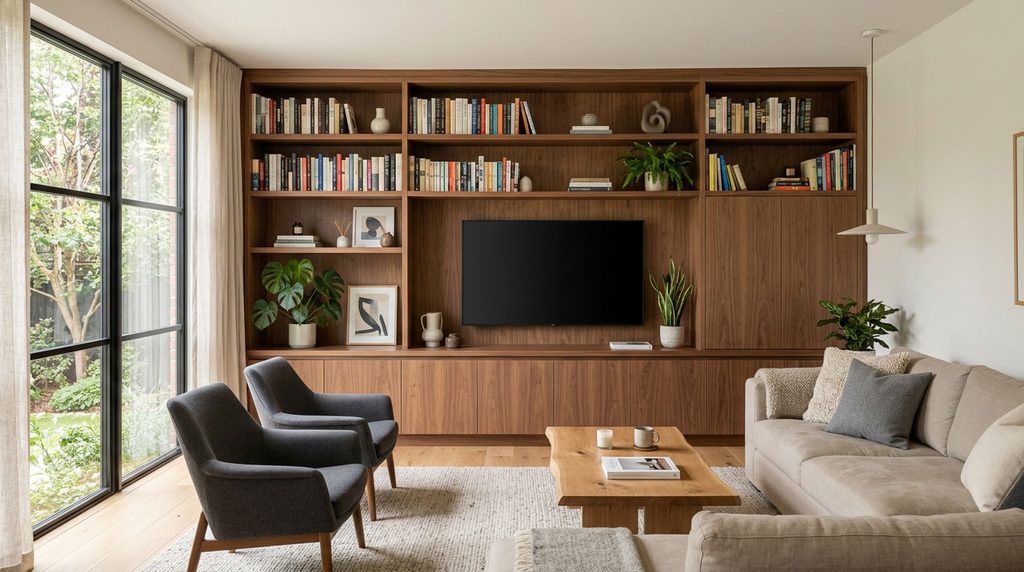
Current home-design trends are reinforcing this idea. Houzz’s 2026 home design trends highlight integrated and hidden features that allow technology, household essentials, and storage to blend more naturally into a room.
Multifunctional built-ins are another growing feature. A single wall of cabinetry might incorporate closed storage, shelving, a television area, a workspace, or seating instead of requiring multiple individual pieces of furniture.
You Can Apply the Idea Without Custom Cabinetry
You do not need expensive built-ins to achieve a similar effect. A sideboard with doors, storage ottoman, lidded basket, under-bed container, or freestanding cabinet can provide useful hidden storage.
The important principle is giving visually distracting necessities somewhere easy to return to after use.
Make Frequently Used Items the Easiest to Reach
Good organization should reflect frequency of use.
Items you reach for every day belong in your most convenient drawers, shelves, and cabinets. Seasonal decorations, special serving pieces, luggage, and rarely used equipment can occupy less accessible areas.
Separate Active and Passive Storage
Think of eye-level shelves, entryway cabinets, top drawers, and easily accessible closets as active storage. These spaces should primarily contain things that support daily routines.
Higher shelves, basement storage, garage cabinets, and the backs of deep closets are better suited to belongings used occasionally.
This prevents a rarely used item from occupying valuable space while something you need every morning remains inconveniently stored.
Take Advantage of Vertical Space
When storage feels limited, look upward before assuming you need more furniture.
Wall-mounted shelves, hooks, over-door organizers, stacking containers, taller bookcases, and additional closet shelving can make better use of existing square footage.
Leave Some Empty Space
Using vertical storage does not mean filling every available inch. Leaving breathing room on shelves and inside cabinets can make it easier to see what you own and return items to their places.
A storage system that requires carefully rearranging six objects every time you put one thing away will probably become frustrating over time.
Create a Short Daily Reset
Even a thoughtfully organized home will become messy during normal life. The difference is that a functional system makes restoring order relatively quick.
Consider spending a few minutes at the end of the day returning items to their designated places. Clear the main countertop, return shoes to storage, place loose papers where they belong, and reset the living room.
This does not need to become an elaborate cleaning routine. The objective is simply to prevent small amounts of clutter from accumulating into a larger weekend project.
Make Organization Easy to Maintain
If a particular area repeatedly becomes messy, examine the system instead of assuming you need to be more disciplined.
A basket might be too small. A cabinet may be inconvenient. Family members may not know where something belongs. A frequently used item could simply be stored too far from where it is needed.
The Best Systems Fit Real Life
An effective home organization system should feel natural enough that maintaining it requires little thought. Practicality is more important than achieving a picture-perfect appearance.
A More Organized Home Can Start Small
Making your home feel more organized does not require empty rooms, expensive storage systems, or an entire weekend devoted to decluttering. Start with the places that create the most daily frustration and solve them one at a time.
Reduce unnecessary belongings, assign everyday items permanent homes, organize around activities, make better use of closed and vertical storage, and keep frequently used essentials within easy reach.
These simple changes can reduce visible clutter and make everyday routines easier. Most importantly, they create an organization system based on how you actually live rather than how an idealized home is supposed to look.
Explore more practical ideas for creating comfortable, functional spaces at Lifestyle FYI.